Sudan’s oil-rich Kordofan region has become a key battleground in the war between the army and rival paramilitary forces, with both sides vying for control over territory that holds the lifeline of the country’s economy.
Analysts say whoever controls Kordofan effectively commands Sudan’s oil supply and a significant portion of its landmass. The stakes are high: in 2023, Sudan exported $1.13 billion worth of crude petroleum, making it the world’s 40th largest exporter. Crude oil was the nation’s top export, with Malaysia ($468M), Italy ($299M), Germany ($125M), China ($105M), and Singapore ($80.3M) as major buyers. For landlocked South Sudan, Kordofan is just as vital since its oil exports depend on pipelines running through the region to Port Sudan.
Several companies, including Chinese, Malaysian, and Indian-owned entities, are involved in oil exploration and production in Kordofan. The Greater Nile Petroleum Operating Company (GNPOC) and 2B Operating Petroleum Company are key players, with joint ownership involving state-owned companies from China, Malaysia, and India, alongside the Sudanese government. This blend of foreign and domestic investment reflects Kordofan’s global economic importance and the broader geopolitical interests now endangered by the conflict.
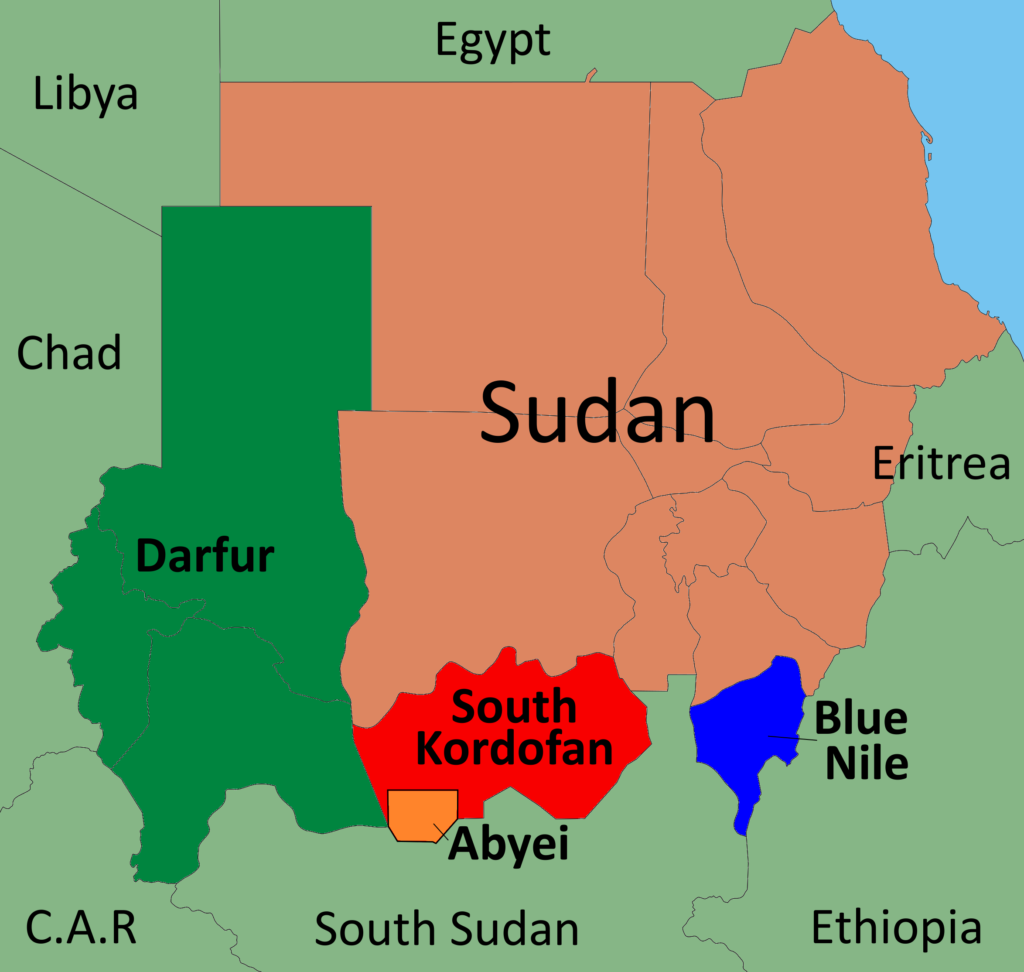
The battle for Kordofan, which spans three states and is home to nearly eight million people, has escalated since June when the army launched a major push to reclaim areas from the Rapid Support Forces (RSF). This followed months of military gains, including the recapture of Khartoum and neighbouring Gezira state, Sudan’s agricultural heartland.
On 20 July, Sudan’s military leader, Gen Abdel Fattah al-Burhan, made his second visit to Khartoum since March when his forces expelled the RSF from the city. Yet he remains based in Port Sudan, a sign of the capital’s fragile security and widespread destruction.
The war, which erupted in April 2023 after a breakdown between Gen Burhan and RSF commander Gen Mohamed Hamdan Dagalo (“Hemedti”), has killed about 150,000 people and displaced roughly 12 million. This is comparable to the entire population of Tunisia or Belgium. Once allies who staged a coup together in 2021, the two men turned on each other after Dagalo resisted plans to fold the RSF into the army.
Many RSF fighters belong to the Misseriya ethnic group of West Kordofan and have vowed to defend their communities. But recent army airstrikes in West Kordofan, including in the capital el-Fula and the town of Abu Zabad, have stirred anger among locals. Critics warn that such strikes amount to collective punishment of RSF “social incubators.”
Although the army still holds key oil fields, the RSF has threatened to target Heglig’s oil facilities in South Kordofan if air bombardments persist. “If the army’s aviation returns again and bombs citizens in West Kordofan state, we will strike and shut down Heglig’s oil and kill the engineers,” warned Youssef Awadallah Aliyan, head of the RSF’s civilian administration in the state, according to media reports.
The United Nations Office for the Coordination of Humanitarian Affairs (OCHA) condemned the strikes on el-Fula and Abu Zabad, which reportedly killed more than 20 people, including families sheltering in a school. It called for the protection of civilians and civilian infrastructure. The RSF has also faced accusations of mass killings, with UNICEF reporting that over 450 civilians, including children and pregnant women, were killed in recent attacks in North Kordofan.
The Yale Humanitarian Research Lab said satellite imagery of Shag Alnom indicated deliberate arson. The Emergency Lawyers rights group reported that more than 200 victims there were either burned alive in their homes or shot.
Fears are growing of an imminent RSF offensive on el-Obeid, North Kordofan’s capital, after intense fighting over the nearby town of Umm Sumaima. Analysts describe Umm Sumaima as the army’s last defensive post before the city. Its capture would allow the RSF to besiege el-Obeid, while the army seeks to break through and rearm its forces elsewhere in Kordofan.
Covering 390,000 square kilometres (150,000 square miles), Kordofan is strategically and economically indispensable. While its fate may not decide the war outright, analysts warn it could shift the balance of power and further cripple Sudan’s struggling economy.
Table showing oil export data in 2023. Sudan exported $1.13 billion worth of crude petroleum:
| Destination Country | Value (USD Millions) | Share of Total Crude Petroleum Exports |
| Malaysia | 468.0 | 41.4% |
| Italy | 299.0 | 26.5% |
| Germany | 125.0 | 11.1% |
| China | 105.0 | 9.3% |
| Singapore | 80.3 | 7.1% |
| Total | 1,077.3 | 95.4% |